


MARINE · SALTWATER · BOAT
Marine Cable Ties & Boat Zip Ties
Built to Survive Saltwater, UV, and the Open Sea.
Standard cable ties crack, rust, and fail at sea. Our marine-grade range — UV Nylon, 316 Stainless, and Coated Stainless — is engineered specifically for boats, docks, offshore platforms, and saltwater environments of every kind.
316 Marine Grade
Molybdenum-enhanced stainless
UL94V-2 Certified
Flame retardant rated
20–30 Year Lifespan
Stainless in saltwater
All Sizes In Stock
Fast dispatch available
OVERVIEW
Why Material Selection is Everything
When it comes to cable management at sea, the difference between the right cable tie and the wrong one is the difference between a wiring harness that performs reliably for decades and one that fails within a single season.
The marine environment is one of the most hostile on earth for polymer and metal fasteners alike: saltwater accelerates galvanic corrosion; UV radiation at sea is significantly more intense than inland; and constant vibration works mechanical fasteners loose in ways that land-based applications never encounter.
We stock three core product types — UV-Stabilised Nylon, 316 Stainless Steel, and Coated Stainless Steel — each engineered for a specific range of marine environments and applications.
THE PROBLEM
Why Standard Cable Ties Fail at Sea
Standard cable ties found in hardware stores are designed for indoor and light outdoor use. Here are the three specific failure modes that make them unacceptable for marine applications.
✕ Saltwater Corrosion
Standard nylon absorbs moisture and salt, losing up to 40% of its tensile strength within weeks. Metallic components rust and seize. The tie that felt secure in the chandlery will be crumbling on your boat within a season.
✕ UV Degradation
Prolonged sun exposure causes standard nylon to become brittle. Ties lose flexibility and snap under minimal pressure. A tie rated for indoor use has no business being on an above-deck installation.
✕ Vibration & Movement
Engine vibration, wave impact, and hull flex work standard ties loose over time. Marine-grade ties lock and self-tighten rather than creeping — critical for electrical harnesses and fuel line bundling.
OUR PRODUCTS
Choose Your Marine Cable Tie
Three marine-grade cable tie types, each optimised for a different range of applications. All available in multiple sizes.
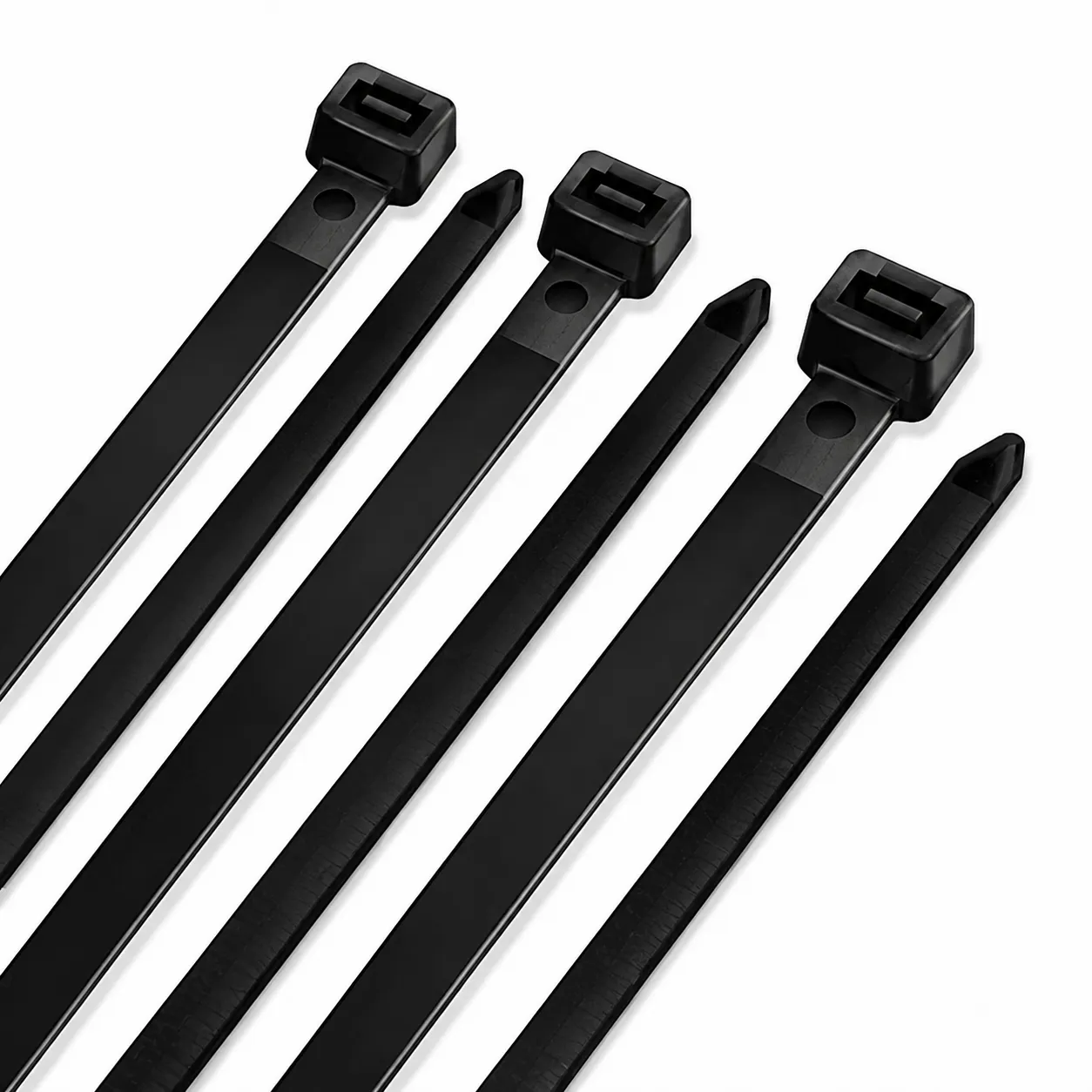
Flexible, affordable & UV-resistant
- Nylon 66, UL94V-2 rated
- Temp: −25°C to 85°C
- Tensile: up to 50 LBS / 22 KG
- UV stabilised — black & natural white
- Self-locking ratchet mechanism
Best for: Deck wiring, nav electronics, above-deck bundling
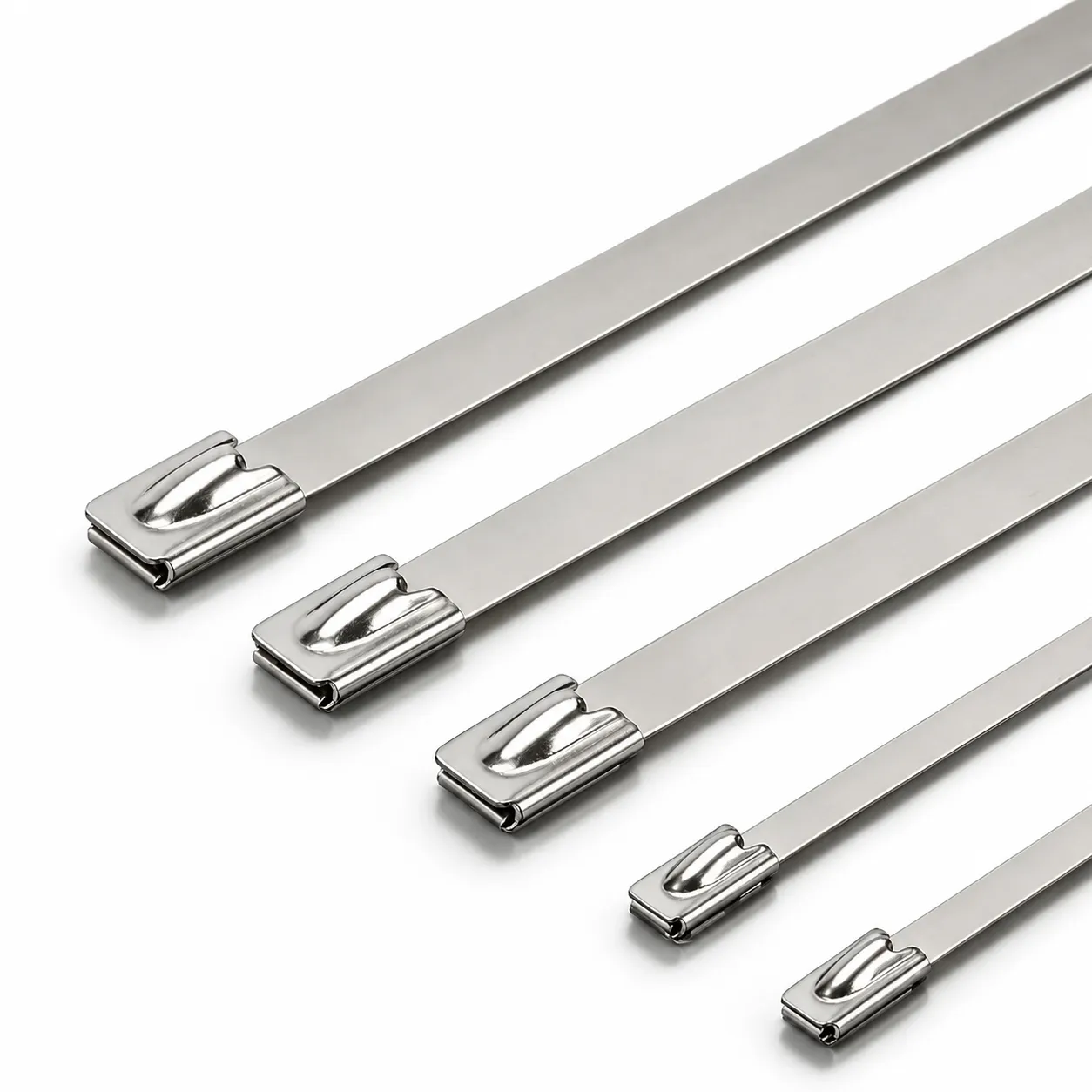
Maximum strength for harsh environments
- Grade: 316 marine-grade stainless
- Temp: −100°C to 538°C
- Tensile: up to 250 LBS / 114 KG
- Molybdenum-enhanced chloride resistance
- Permanent, vibration-proof fastening
Best for: Bilge, engine bay, permanent installs, submerged use
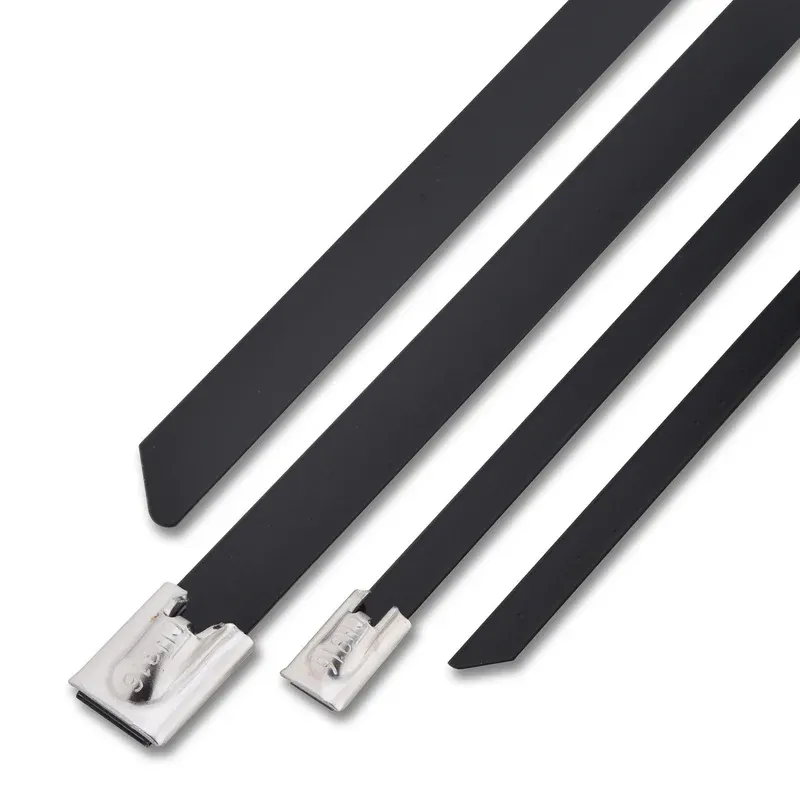
Stainless strength, surface-safe coating
- Core: 316 stainless steel
- Coating: Nylon-coated, no scratch
- Tensile: up to 250 LBS / 114 KG
- Protects delicate surfaces
- Ideal for painted or fibreglass hulls
Best for: Painted hulls, fibreglass, wiring on sensitive surfaces
MATERIAL GUIDE
Understanding Marine Cable Tie Materials
An honest technical breakdown of each material — including limitations.
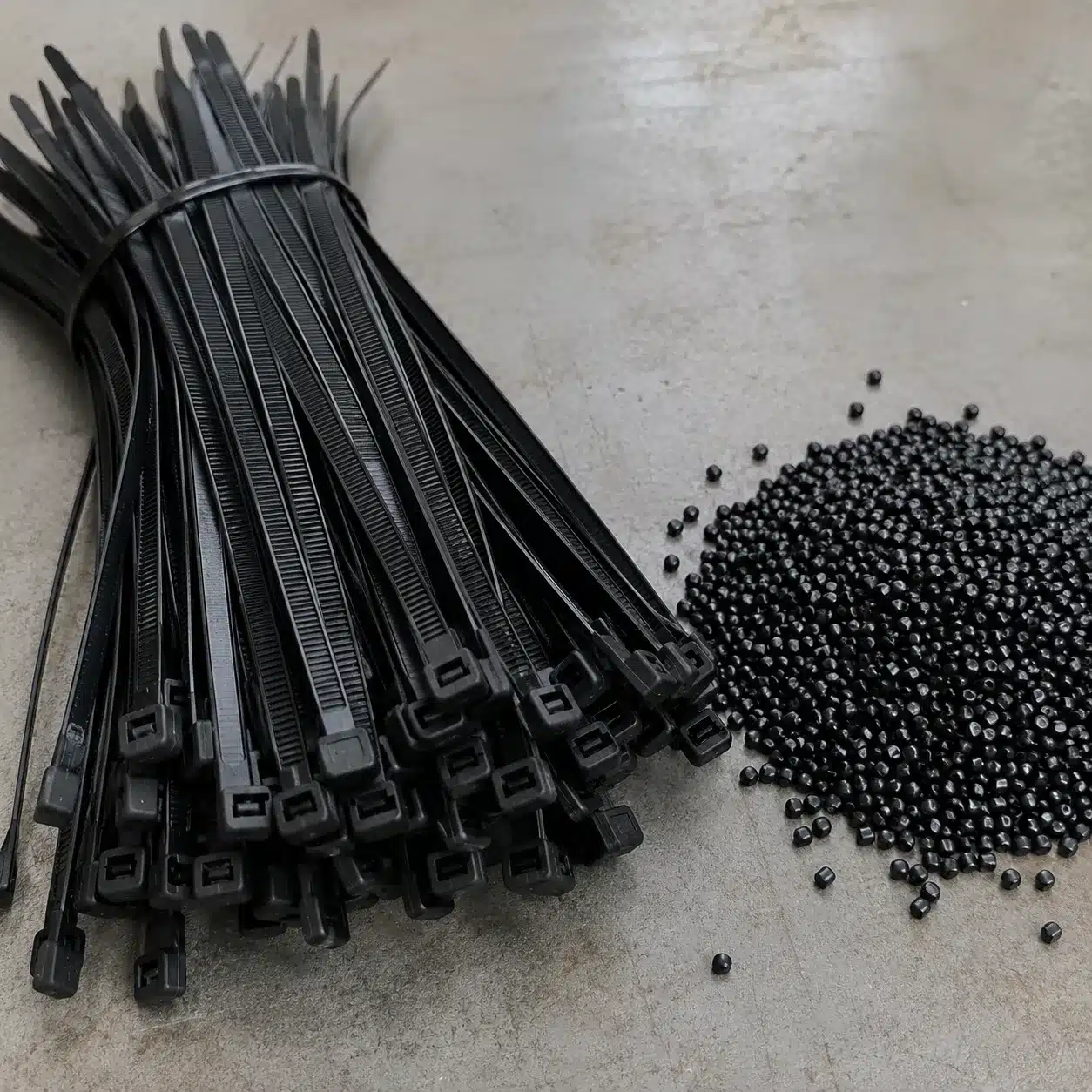
Nylon 66 (UV-Stabilised)
Nylon 66 is the industry standard for general-purpose cable ties, but not all Nylon 66 is equal. Marine-grade UV-stabilised nylon includes additional carbon black or UV inhibitor compounds that dramatically extend service life in sunlight.
Rated to UL94V-2 for flame retardancy, maintaining flexibility and tensile strength across a wide temperature range. UV black nylon cable ties remain flexible and strong for 3–5 years on deck.
Key distinction: Nylon absorbs moisture. In submerged or bilge environments this accelerates degradation — this is where stainless steel takes over.
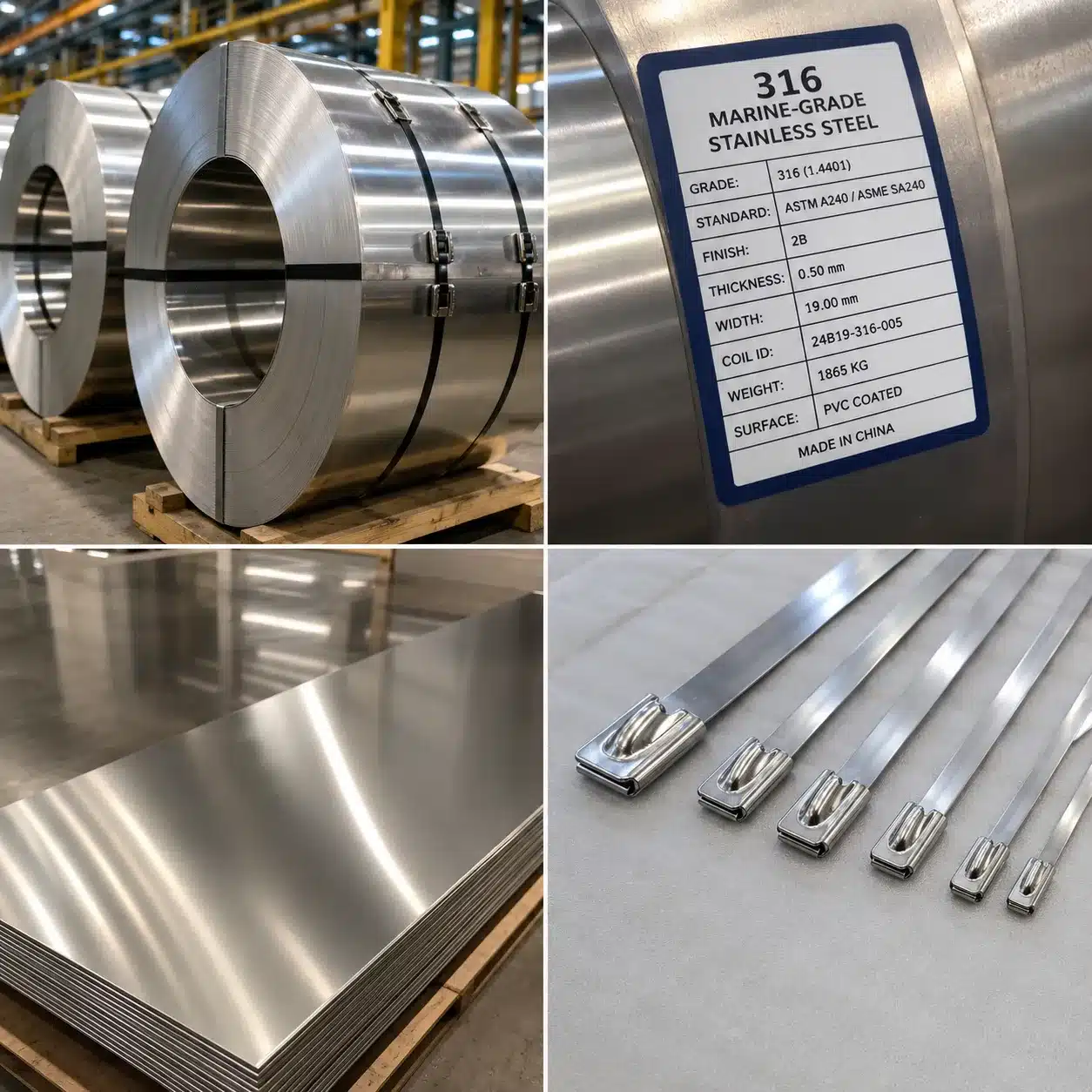
316 Marine-Grade Stainless Steel
316 stainless steel is the definitive material for harsh marine environments. The addition of 2–3% molybdenum dramatically improves resistance to pitting and crevice corrosion caused by chloride ions in saltwater.
Where 304 stainless will corrode and pit within months, 316 will typically last 20–30 years with minimal degradation — the material of choice for offshore installations and any below-waterline application.
Operates from −100°C to 538°C — far beyond any nylon product, making it indispensable in engine bays.
Coated Stainless Steel
Coated stainless ties take the performance of 316 marine-grade steel and add a nylon coating that solves two problems standard stainless ties cannot: surface damage and cable abrasion.
The nylon coating creates a smooth, rounded contact surface that protects both the cable and the substrate — the preferred choice for fibreglass hulls, painted aluminium surfaces.
The additional cost is justified wherever the surfaces being protected are worth more than the fasteners.
APPLICATIONS
Where Marine Cable Ties Are Used
Six primary application areas on vessels and marine installations.
Navigation & Electronics
Helm, chartplotter, VHF
UV-stabilised nylon ties are ideal — above deck but protected from direct submersion. Flexibility of nylon makes routing easier around tight corners and instrument bezels.
Engine Room & Bilge
High heat, permanent installs
316 stainless is the only appropriate choice. Operates to 538°C, resists saltwater and fuel-contaminated bilge water, and won’t creep loose under constant vibration.
Deck & Rigging
Above-deck, UV exposure
UV-stabilised black nylon ties for cable runs. Coated stainless for permanent structural deck installations.
Outboard Motor Wiring
Vibration, splash, tilt
UV nylon handles light harness bundling. Coated stainless for permanent harness fastening adjacent to the powerhead.
Dock & Marina Installs
Pontoons, shore power
316 stainless for any permanent dock installation — will outlast the wiring itself with no periodic replacement needed.
Offshore & Commercial
Vessels, platforms
316 stainless throughout. The only ATEX-compatible and IMO-compliant choice for cable fastening.
SELECTION GUIDE
Which Marine Cable Tie Do You Need?
Use this quick-reference guide to identify the right product. When in doubt, default to the more robust option.
Your Situation
UV Nylon
316 Stainless
Coated Stainless
Above-deck wiring, general use
✓ Ideal
✓ Works
✓ Works
Bilge or engine room install
✕ Not suitable
✓ Recommended
✓ Works
Submerged or below waterline
✕ Not suitable
✓ Only option
✓ Works
Painted or fibreglass surface
✓ Works
⚠ May scratch
✓ Ideal
High temperature (>85°C)
✕ Will fail
✓ Recommended
✓ Works
Budget-conscious build
✓ Best value
⚠ Higher cost
⚠ Premium
Commercial / safety-critical
⚠ Light duty only
✓ Recommended
✓ Recommended
INSTALLATION
Installation Best Practices
Five best practices drawn from common failure modes on vessels where cable management has been reported as problematic.
1
Allow Slack for Movement
Boats flex constantly. Always leave a small amount of slack in bundled wiring — a harness tied too tightly will chafe against tie edges with every wave. Rule: if you can’t slide a finger under the bundle, the tie is too tight.
2
Trim Flush, Not Short
Cut tie tails flush with the head rather than leaving a stub. Protruding tails on stainless ties are a laceration hazard and can abrade adjacent cables. Always use proper flush-cut tools.
3
Orientation Matters
Orient the tie head to face downward or toward a drain path. Water pooling around a tie head accelerates degradation even on UV-rated nylon.
4
Inspect Annually
Even 316 stainless ties should be inspected yearly. Look for crevice corrosion at the locking mechanism and UV-induced brittleness on nylon ties.
5
Use the Right Size
Undersized ties are a common failure point. Always size up when in doubt. Our spec sheet lists maximum bundle diameter for every product.
FULL COMPARISON
Product Specification Comparison
All performance criteria compared across all three product types. All specifications verified against manufacturer test data.
UV Nylon
316 Stainless
Coated Stainless
Material
Nylon 66
316 Stainless Steel
316 SS + Nylon Coat
Saltwater Resistance
Good
Excellent
Excellent
UV Resistance
High
High
High
Tensile Strength
50 LBS / 22 KG
250 LBS / 114 KG
250 LBS / 114 KG
Temperature Range
−25°C to 85°C
−100°C to 538°C
−100°C to 538°C
Surface Safe
Yes
⚠ Sharp edges
Yes — coated
Typical Lifespan
3–5 years
20–30 years
20–30 years
Best Environment
Above deck
Bilge / engine room
Fibreglass / painted
Price Point
$
$$$
$$$$
FAQ
Frequently Asked Questions
Can I use regular zip ties on a boat?
Standard nylon cable ties are not formulated for marine use. They lack UV stabilisers and absorb saltwater which degrades tensile strength significantly. For any permanent installation, always use UV-stabilised marine nylon as a minimum, or stainless steel for anything below deck or in the engine room.
What is the difference between 304 and 316 stainless steel cable ties?
304 stainless is susceptible to pitting and crevice corrosion when exposed to chloride ions in saltwater. 316 stainless adds 2–3% molybdenum, dramatically improving chloride resistance. For any marine application, always specify 316.
Are nylon cable ties OK for saltwater environments?
UV-stabilised Nylon 66 cable ties perform well in above-deck marine environments. They are not suitable for submerged use or bilge installations — for those environments, 316 stainless is the correct specification.
How long do marine cable ties last?
UV-stabilised Nylon 66 ties in above-deck conditions typically last 3–5 years. 316 stainless steel cable ties in typical marine environments will last 20–30 years with no significant degradation.
What size marine cable tie do I need?
Bundle diameter — not tensile strength — is usually the determining factor. SBS-5 covers up to 150mm, SBS-8 up to 170mm, SBS-12 up to 190mm at 250 LBS tensile. When in doubt, size up.
Are stainless steel cable ties safe for electrical wiring?
Yes, with one caveat: bare stainless ties have metal edges that can abrade cable insulation under constant vibration. For direct cable contact, coated stainless steel ties are the recommended choice.
WHY CHOOSE US
Why Buy From Us
Every product comes with published, tested specifications. We don’t make generic claims about ‘marine suitability’ without the material grade to back it up.
UL94V-2 Certified
All nylon cable ties meet UL flame-retardancy standards — non-negotiable for any marine electrical installation.
316 Marine Grade
Stainless ties manufactured from molybdenum-enhanced 316 grade steel — the only stainless that belongs in a saltwater environment.
UV Stabilised
UV black nylon ties formulated with UV inhibitors rated for continuous outdoor and marine sun exposure.
Tested Specs Published
Every product page lists exact, tested tensile strength in both LBS and KGS. No vague marketing claims.
READY TO ENQUIRE?
Browse Our Full Marine Cable Ties Range
UV Nylon · 316 Stainless Steel · Coated Stainless · All Sizes in Stock · Fast Dispatch