


MARINE · SALTWATER · BOAT
Garden Cable Ties & Plant Zip Ties
Outdoor-Rated Fasteners Built to Last Through Every Season.
Standard cable ties yellow, crack, and fail outdoors within months. Our UV-stabilised nylon garden cable ties — available in standard, releasable, and biodegradable formats — are engineered for plants, trees, trellises, and outdoor installations of every kind.
Biodegradable Cable Ties
Biodegradable Cable Ties
UL94V-2 Certified
Flame retardant rated
20–30 Year Lifespan
Stainless in saltwater
All Sizes In Stock
Fast dispatch available
OVERVIEW
Garden Cable Ties: Why Outdoor Rating is Everything
Managing plants, training climbers, supporting young trees, and organising garden wiring all sound simple — until your cable ties fail mid-season. A tie that snaps in summer lets a climbing rose drop its support. A tie that cuts into bark damages a young fruit tree permanently. A tie that degrades in UV leaves brittle fragments scattered through your soil.
This page covers the full range of garden cable ties, plant zip ties, and outdoor-rated fasteners we stock — from lightweight UV nylon ties for delicate seedlings to releasable garden zip ties for vegetables that need adjusting throughout the season.
We stock three core types: Green UV Nylon, Black UV Nylon, Releasable Nylon, and Biodegradable Cable Ties — each designed for a different garden application and plant care need.
Garden cable ties are not just a convenience product — the wrong tie cuts into bark, restricts growth, sheds microplastics, and fails at exactly the wrong moment. Choosing the right outdoor-rated zip tie for plants is a genuine horticultural decision.
THE PROBLEM
Why Standard Cable Ties Fail in the Garden
Standard cable ties — the kind sold in hardware stores for electrical and general workshop use — are not designed for outdoor garden applications. Here are the three specific failure modes that make them unsuitable for plant and tree work:
✕ UV Degradation
Standard nylon becomes brittle and snaps after a few months of direct sunlight.
A tie used to support a young tomato plant in spring may shatter by mid-summer.
UV-stabilised garden zip ties are formulated to remain flexible for 3-5 outdoor seasons.
✕ Bark & Stem Damage
Rigid plastic ties applied too tightly cut into bark and stems as plants grow.
This creates wounds that allow disease entry and can girdle a stem if left unchecked.
The wrong tie type and size is one of the most common causes of plant damage in the garden.
✕ Wrong Type for the Job
Using a permanent self-locking tie on a fast-growing vegetable means cutting it off mid-season.
Standard black electrical ties are not UV-stabilised and fail faster than garden-rated ties.
Releasable and biodegradable variants exist specifically for garden use — but are often overlooked.
OUR PRODUCTS
Choose Your Garden Cable Tie
We stock three types of outdoor-rated garden cable ties — all made from UV-stabilised nylon — each optimised for a different garden application. From permanent trellis fixing to adjustable seasonal plant support.
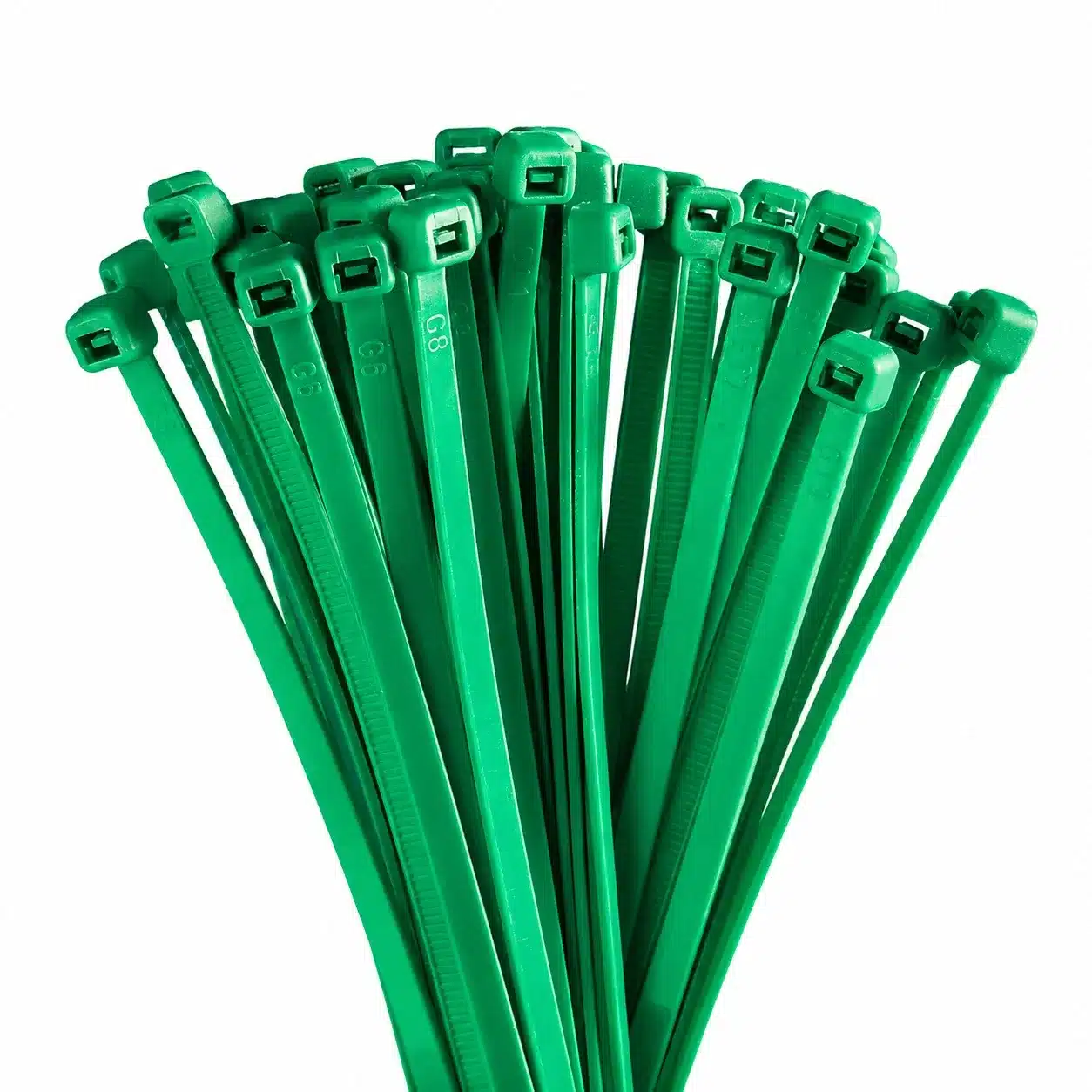
Standard self-locking garden zip ties
- Material: UV-stabilised Nylon 66
- Colour: Green — blends with foliage naturally
- Temp: -25°C to 85°C
- Sizes: 100mm to 762mm lengths
- Widths: 2.5mm to 9mm
- Self-locking, permanent application
- UL94V-2 flame retardant rated
Best for: Trellis training, climbing plants, securing netting and garden structures
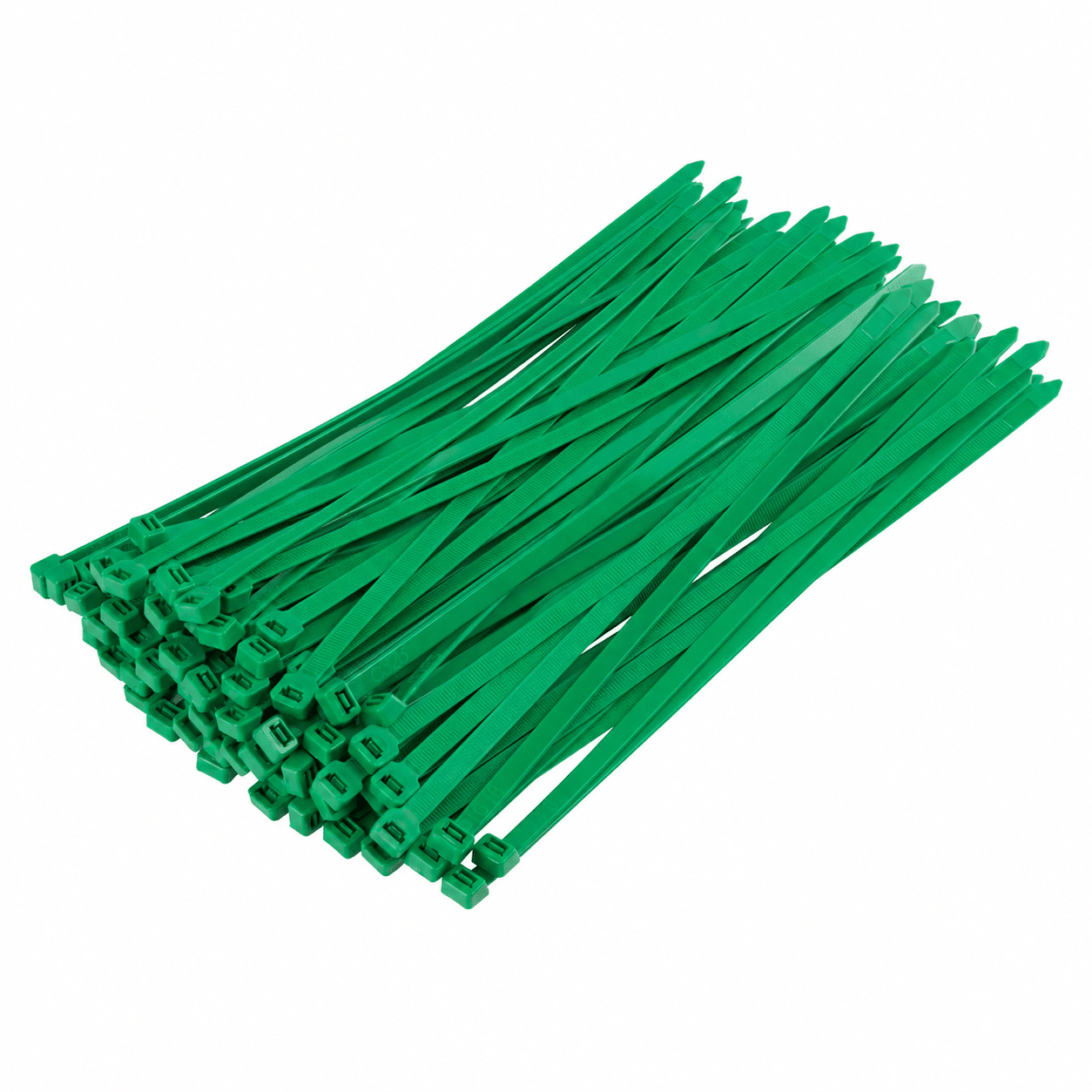
Reusable, adjustable zip ties for growing plants
- Material: UV-stabilised Nylon 66
- Quick-release trigger mechanism
- Available in green, black, and red
- Resizable as plants grow — no cutting needed
- Reusable season to season
- Sizes: 150mm to 300mm
- Reduces single-use plastic waste
Best for: Tomatoes, cucumbers, beans, roses — any plant needing regular resizing during growth
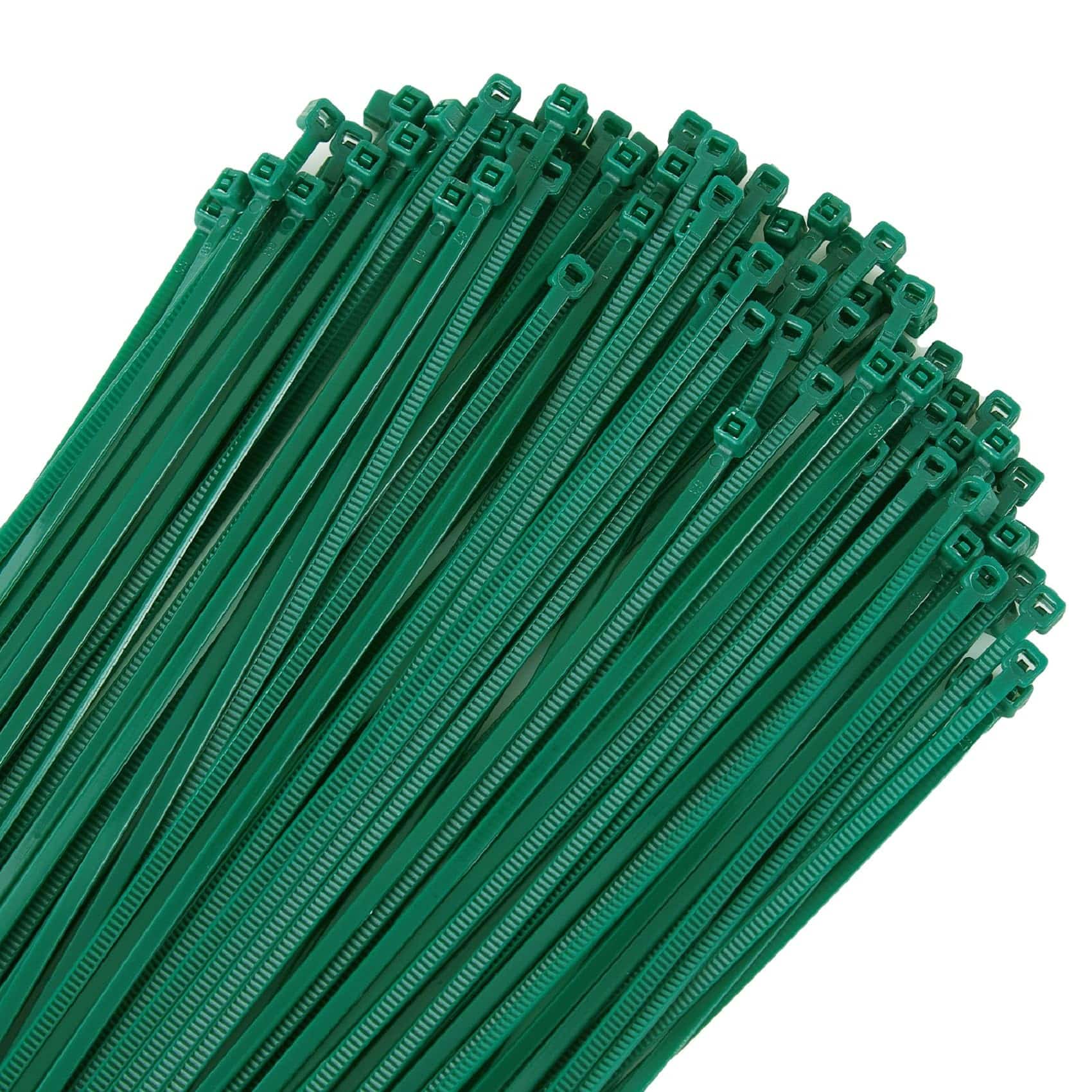
Biodegradable Cable Ties
UV-triggered biodegradable nylon for seasonal use
- Material: Biodegradable nylon compound
- Colour: White or natural
- Biodegrades after 2+ years of UV/moisture exposure
- Same self-locking mechanism as standard nylon
- Sizes: 150mm and 300mm
- Certified biodegradable — no permanent plastic waste
- Ideal for annual planting support
Best for: Annual planting, seasonal growing, eco-conscious gardens — ties you don’t want to collect at season-end
Not sure which to choose? Green nylon for climbing plants & trellis | Black nylon for garden wiring & structures | Releasable for vegetables & actively growing plants | Biodegradable for seasonal planting and eco-conscious growing.
MATERIAL GUIDE
Understanding Garden Cable Tie Materials
All three of our garden cable tie types are nylon-based — the difference is in the UV stabilisation level, the locking mechanism, and the degradation profile. Here is an honest breakdown of each.
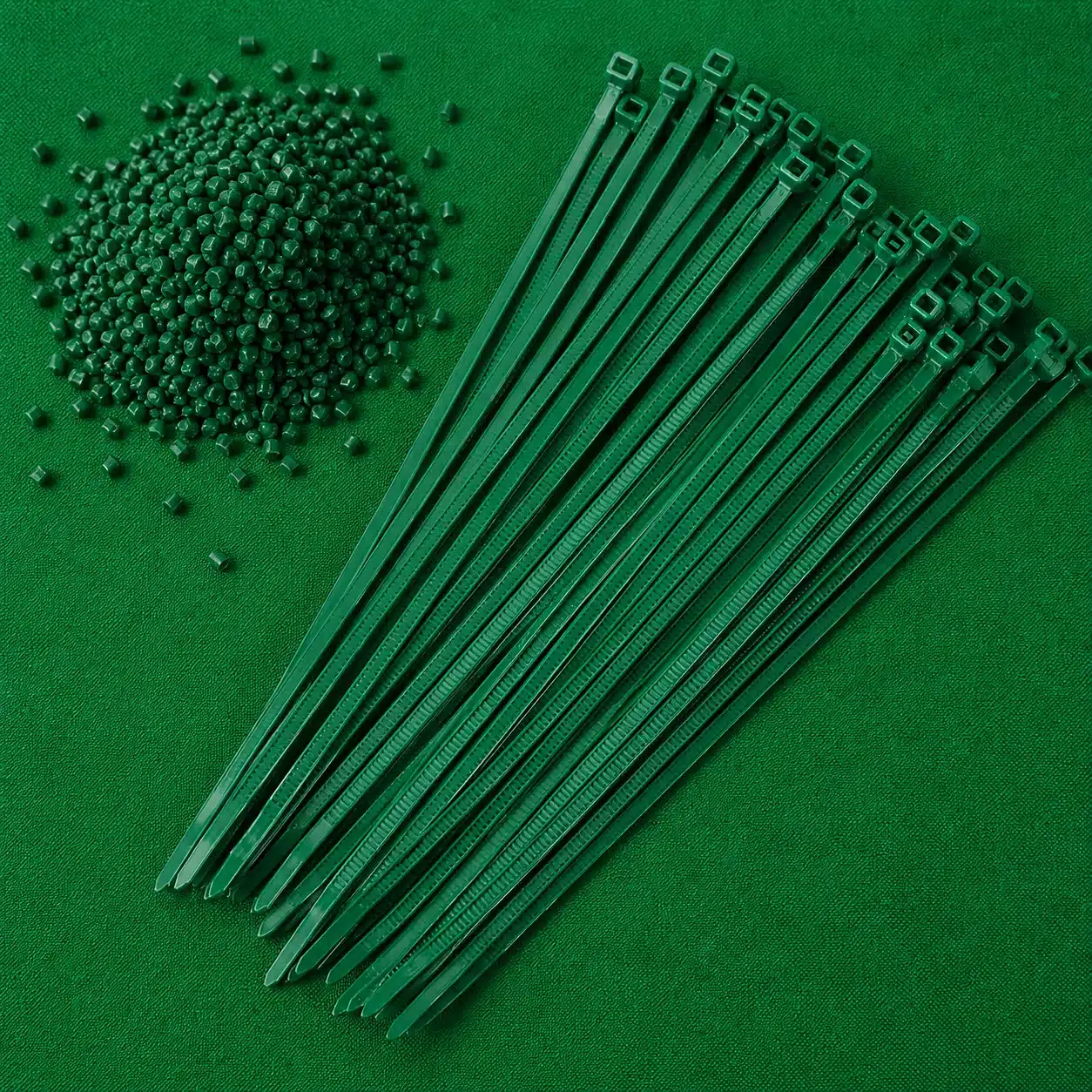
Green UV-Stabilised Nylon 66
Green UV-stabilised nylon cable ties are the most popular choice for garden use because they blend naturally into foliage, plant stems, and garden structures. The green pigment includes UV stabilisers that dramatically extend outdoor service life compared to standard un-stabilised nylon.
The standard self-locking mechanism provides a permanent, secure fixing — ideal for permanent trellis structures, securing climbing plants to wires, and any application where the tie is not expected to be adjusted during the season.
Key limitation: the self-locking mechanism cannot be released without cutting. On fast-growing plants, this means the tie will need replacing as the plant expands. For actively growing stems, use the releasable variant instead.
Releasable UV Nylon Cable Ties
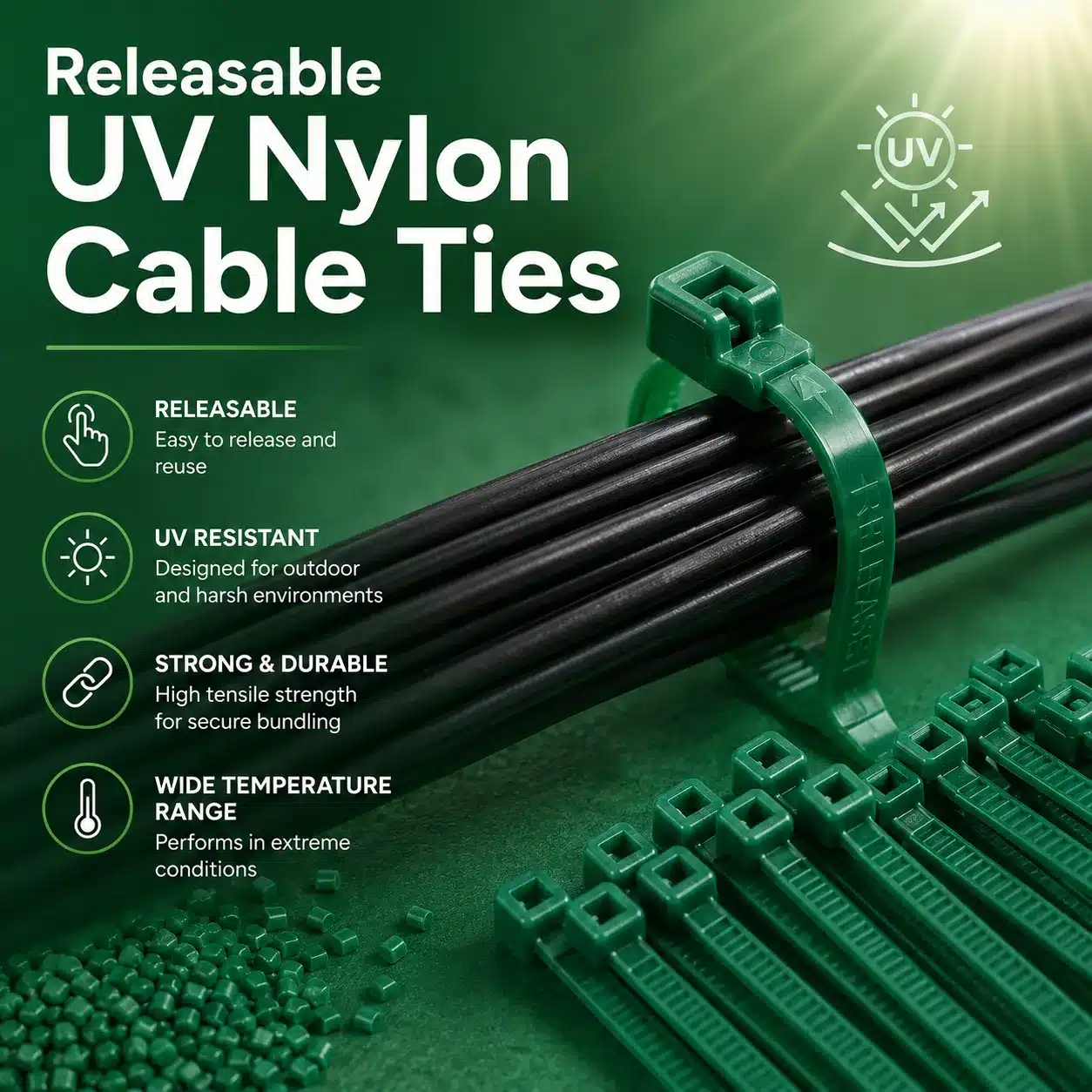
Releasable cable ties — also called trigger ties or reusable garden zip ties — feature a quick-release tab that allows the tie to be opened, adjusted, and re-closed without cutting. They use the same UV-stabilised Nylon 66 as standard ties, so outdoor performance is equivalent.
For garden use, releasable ties are the correct choice for any plant that will grow significantly during the season: tomatoes, cucumbers, climbing beans, roses, and any vegetable that is tied to a stake multiple times as it grows. Instead of cutting and replacing ties, you simply release, resize, and re-fasten.
Releasable ties come in green and black variants and can be collected at the end of the season and reused the following year — significantly reducing single-use plastic consumption in the garden.
Biodegradable Nylon Cable Ties
Biodegradable cable ties are manufactured from a modified nylon compound that breaks down when exposed to UV light, heat, moisture, and soil microorganisms over a period of at least two years. They perform identically to standard cable ties in the short term — same tensile strength, same self-locking mechanism.
After two or more seasons of outdoor exposure, biodegradable ties begin to fragment and break down without leaving the persistent plastic fragments that standard nylon leaves in soil. This makes them the correct choice for annual beds, allotments, and any setting where collecting used ties at season-end is impractical.
Key consideration: biodegradable ties are not designed to be permanent. If you need a tie to last 5+ seasons on a permanent trellis structure, use standard UV nylon instead. The biodegradable variant is optimised for temporary seasonal support.
Rule of thumb: Green nylon for permanent plant support on trellis and wires. Black nylon for garden wiring, irrigation, and structural fixings. Releasable ties for any plant that will grow and need resizing. Biodegradable for annual planting and eco-conscious growing where permanence is not required.
APPLICATIONS
Where Garden Cable Ties Are Used
The following covers the primary application areas in domestic gardens, allotments, vegetable plots, and outdoor growing environments. Each area notes which cable tie type is recommended.
Climbing Plants & Trellis
Roses, wisteria, clematis, sweet peas
Training climbers onto trellis, wires, or support structures is the most common garden cable tie application. Green UV nylon ties work well for securing stems to metal or timber frameworks permanently. Use releasable ties on young, fast-growing climbers that will need resizing through the season.
Vegetable Growing
Tomatoes, cucumbers, beans, peppers
Releasable garden cable ties are the correct choice for vegetable support — tomatoes, cucumbers, and beans grow rapidly and need their ties adjusted regularly throughout the season. Apply loosely, leaving room for stem growth, and use the quick-release mechanism to resize as needed rather than cutting and replacing.
Young Tree Support
Whips, standards, newly planted trees
UV nylon cable ties secure tree shelters and mesh guards to stakes during the establishment period. Use ties with appropriate tensile strength for the tree shelter size — 4.8mm width ties are standard for 20cm and 30cm tree guard applications. Always allow slack for trunk movement and check annually.
Garden Wiring & Structures
Pergolas, fencing, irrigation lines
Securing garden lighting cables, irrigation drip lines, and electrical feeds to pergolas, fence posts, and raised bed frames calls for black UV-stabilised outdoor cable ties. Black ties on black or dark frameworks are virtually invisible and last 5-10 years outdoors with no maintenance.
Seasonal Planting Beds
Annual beds, allotments, polytunnels
Biodegradable cable ties are the practical choice for annual beds and allotments where collecting used ties at season-end is difficult. They provide a full season of reliable support and begin to break down over subsequent seasons without leaving persistent plastic fragments in your soil.
Garden Structures & DIY
Raised beds, cold frames, garden frames
Building and repairing garden structures — raised bed corners, cold frame hinges, polytunnel fixings — calls for heavy-duty UV nylon ties with high tensile strength. Use wider ties (7.5mm-9mm) and check the stated tensile rating against the expected load before selecting a size.
SELECTION GUIDE
Which Garden Cable Tie Do You Need?
Use this quick-reference guide to match the right cable tie type to your garden situation. The most common mistake is using a permanent self-locking tie on a plant that needs regular adjustment through the growing season.
Your Situation
Green Nylon
Releasable
Biodegradable
Training climbers on trellis
✓ Ideal
✓ Works
⚠ Will degrade
Supporting tomatoes & vegetables
⚠ Hard to adjust
✓ Ideal
✓ Works
Securing garden wiring & irrigation
✓ Works
✓ Works
✗ Too short-term
Young tree shelter fixing
✓ Works
✓ Works
⚠ May degrade too fast
Annual beds & allotments
⚠ Persistent
✓ Reusable
✓ Ideal
Permanent trellis structure
✓ Ideal
✓ Works
✗ Will degrade
Eco-conscious / low plastic waste
⚠ Persistent
✓ Ideal
✓ Ideal
INSTALLATION
Garden Cable Tie Installation: Best Practices
The correct cable tie applied incorrectly will still cause plant damage. These five practices prevent the most common garden cable tie problems — from stem damage to premature failure.
1
Always leave slack for growth
A tie that fits comfortably in spring will be too tight by summer. Always leave two fingers of slack between the tie and the stem or branch. If the tie is against the plant with no movement, it is already too tight. For fast-growing vegetables, check and adjust weekly during peak growing season.
2
Match tie type to the plant
Use releasable ties for any plant that will grow significantly during the season. Use standard self-locking ties only for permanent fixtures — trellis, structures, irrigation lines — where the tie will not need adjusting. Never use a permanent tie where a releasable one would serve better.
3
Size the tie correctly
The tie width and tensile strength must match the application. For delicate seedlings and soft stems, use narrow ties (2.5mm width, 18lb tensile). For tomato cages, shrubs, and fruit tree supports, use wider ties (4.8mm+, 40lb+ tensile). Undersized ties fail; oversized ties can damage stems.
4
Check & adjust every season
Even permanent garden cable ties should be checked annually. Green and black UV nylon ties degrade gradually — if you see chalking, brittleness, or colour fading, replace them before they fail. Remove all seasonal ties from annual beds at the end of the growing season.
5
Do not use on bare bark directly
Rigid nylon cable ties should not be in direct contact with actively growing bark or soft stems without a buffer. If the tie is contacting bark directly, thread a piece of rubber or hessian between the tie and the bark, or switch to a broader, softer tie that distributes pressure over a wider area.
FULL COMPARISON
Garden Cable Tie — Full Specification Comparison
All four garden cable tie types compared across key performance criteria. All are nylon-based — the differences are in UV stabilisation, mechanism, and degradation profile.
Green Nylon
Releasable
Biodegradable
Material
UV Nylon 66
Green / Black / Red
Biodeg. Nylon
Colour
Green
Green / Black / Red
White / Natural
UV Resistance
3–5 seasons
3–5 seasons
2+ seasons then degrades
Mechanism
Self-locking
Quick-release
Self-locking
Reusable
✗ No
✓ Yes
✗ No
Biodegradable
✗ No
✗ No
✓ Yes
Typical Sizes
100–762mm
150–300mm
150–300mm
Best Environment
Trellis, climbing plants
Vegetables, growing plants
Annual beds, allotments
Price Point
$
$$$
$$$$
FAQ
Frequently Asked Questions
What are the best cable ties for plants?
For general plant support — training climbing stems, securing to trellis, supporting perennials — green UV-stabilised nylon garden cable ties are the standard choice. For actively growing plants that will need resizing through the season (tomatoes, cucumbers, climbing beans), use releasable garden zip ties so you can adjust without cutting.
Are standard zip ties OK for outdoor garden use?
Standard nylon cable ties sold for electrical use are not UV-stabilised and will become brittle and snap within a few months of direct sunlight. Always use outdoor-rated UV-stabilised garden zip ties — green or black — for any external garden application.
What is the difference between green and black garden cable ties?
Both are UV-stabilised Nylon 66 — the difference is UV resistance and visibility. Black cable ties have higher UV resistance (5-10 years outdoors) because the carbon black pigment is itself a UV absorber. Green ties are better for plant support where blending with foliage matters. Black ties are better for structural garden installations on dark frameworks.
How long do outdoor garden cable ties last?
UV-stabilised green and black nylon garden zip ties typically last 3-5 and 5-10 seasons respectively with continuous outdoor exposure. Releasable nylon ties offer similar lifespan and can be collected and reused. Biodegradable ties are designed to begin breaking down after 2+ seasons of UV and moisture exposure.
What are releasable cable ties and when should I use them?
Releasable cable ties feature a quick-release tab that allows the tie to be opened, resized, and re-closed without cutting. They are the correct choice for any plant that grows significantly during the season — tomatoes, cucumbers, climbing beans — where permanent ties would need cutting and replacing multiple times. They can also be collected at season end and reused the following year.
Are stainless steel cable ties safe for electrical wiring?
Yes — biodegradable cable ties have the same tensile strength and self-locking mechanism as standard nylon ties. The difference is in the long-term degradation profile: they begin to fragment and break down after 2+ seasons of UV, moisture, and microorganism exposure rather than persisting indefinitely like standard nylon.
WHY CHOOSE US
Why Buy From Us
We stock garden cable ties, plant zip ties, and outdoor-rated fasteners with published, tested performance data — UV rating, tensile strength, temperature range, and material grade — for every product in our range.
We do not sell standard indoor electrical ties labelled as suitable for outdoor garden use. Our outdoor-rated range is formulated for the UV levels, moisture cycling, and temperature extremes of real growing conditions, not a laboratory test environment.
✓ UV Outdoor Rated
All nylon cable ties meet UL flame-retardancy standards — non-negotiable for any marine electrical installation.
✓ Right Type for Every Job
Standard, releasable, and biodegradable variants all stocked. Green and black nylon in full size range — 100mm to 762mm. Printed and coloured variants for plant identification.
✓ Tested Specifications
Tensile strength listed in both LBS and KG for every product. UV resistance stated in outdoor seasons, not just lab test hours. Temperature range and material grade published for all products.
READY TO ENQUIRE?
Browse Our Full Garden Cable Ties Range — Green UV Nylon
Black UV Nylon • Releasable Garden Ties • Biodegradable Ties • All Sizes in Stock • Fast Dispatch